
Why roofing terms matter to homeowners
Knowing basic roofing language makes inspections, repair discussions, insurance questions, and maintenance decisions easier. A few familiar terms can help a homeowner describe a leak accurately, recognize a potential problem, and understand what a roofing report actually says.
This knowledge is especially useful in Wynantskill, where roofs must handle rain, snow, freezing temperatures, wind, and repeated freeze-thaw cycles. Moisture can enter through small weaknesses at roof edges, valleys, walls, chimneys, and plumbing vents even when most shingles still look intact.
What are the main parts of a roof?
A residential roof is a layered system rather than a single surface. Each layer has a different job.
- Roof covering: The visible outer material, such as asphalt shingles, metal panels, slate, or another roofing product.
- Roof deck: The structural surface beneath the covering, commonly made from plywood or oriented strand board. Shingles are fastened to the deck.
- Underlayment: A water-shedding layer installed over the roof deck and below the roof covering. It provides added protection if wind-driven rain or melting snow gets beneath the shingles.
- Flashing: Thin pieces of metal or membrane placed around vulnerable areas to direct water away from seams, walls, chimneys, skylights, and roof penetrations.
- Roof framing: The rafters or trusses that support the deck and transfer roof loads to the walls.
A roof can have attractive shingles and still experience problems if the flashing, underlayment, ventilation, or deck is deteriorated.
What is the difference between eaves, rakes, ridges, and valleys?
These terms describe the roof’s shape and edges.
An eave is the lower horizontal edge of a sloped roof, usually above the gutter. A rake is the sloped edge along the side of a gable. The ridge is the highest horizontal line where two roof slopes meet.
A valley is the inside angle formed where two roof planes meet. Valleys carry a large amount of rainwater and melting snow, so they require careful installation and regular observation.
The hip is an outside sloping intersection where two roof sections meet. A hip roof slopes down on several sides, while a gable roof has vertical end walls beneath two sloping sides.
What are shingles, courses, and ridge caps?
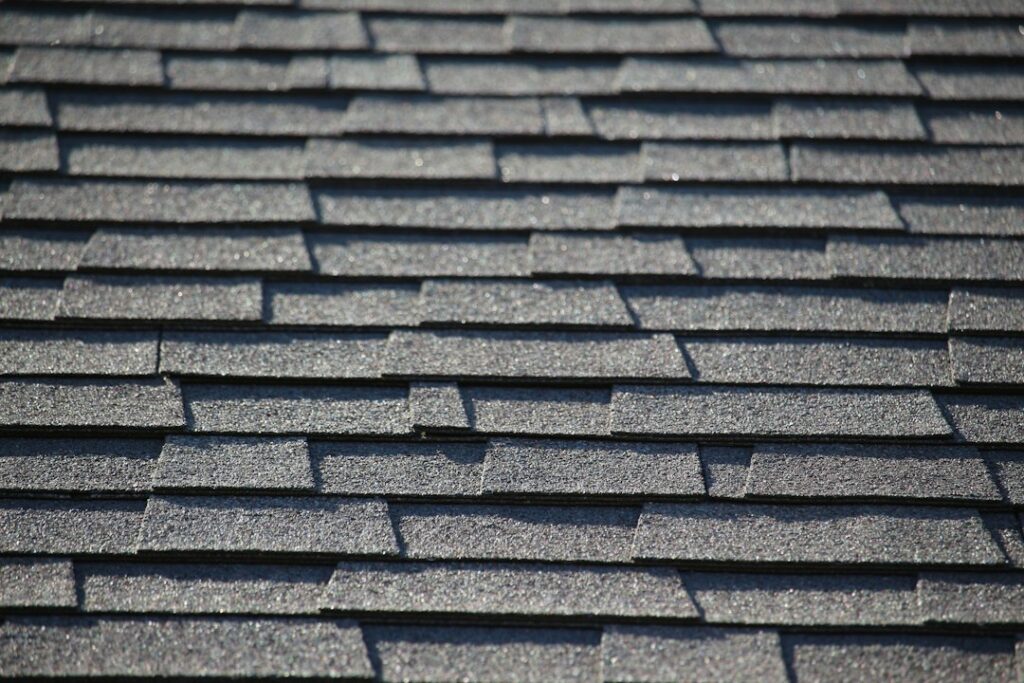
An asphalt shingle is a layered roofing unit designed to shed water and resist weather. Shingles are installed in overlapping horizontal rows called courses.
The first row at the lower edge is often called the starter course. Starter shingles help seal the edge and provide a secure base for the following courses.
At the peak of a roof, specially shaped pieces called ridge cap shingles cover the ridge. Ridge caps are not simply decorative; they protect the uppermost seam and may work with a ridge vent as part of the roof’s ventilation system.
A tab is the visible portion of some traditional strip shingles. A laminated or architectural shingle has multiple layers and a dimensional appearance. These terms describe the product design, not necessarily the overall quality of the roof installation.
What does flashing do?
Flashing redirects water around places where the roof changes direction or meets another surface. It is one of the most important terms to understand because many leaks begin at transitions rather than in the middle of an open shingle field.
Common types include:
- Step flashing: Individual pieces installed where a sloped roof meets a wall. They are layered with the shingles so water is directed downward.
- Counterflashing: Flashing attached to a wall, chimney, or masonry surface that overlaps or protects the lower flashing.
- Apron flashing: A larger piece installed at the lower side of a wall or chimney intersection.
- Valley flashing: Metal or membrane protection installed in a roof valley.
- Pipe flashing: A flexible or metal assembly that seals around a plumbing vent pipe.
- Drip edge: A narrow metal strip installed along eaves and rakes to guide water away from the deck and fascia.
Flashing should not be confused with caulk. Sealants can support a flashing detail, but caulk alone is rarely a substitute for correctly layered materials.
What are underlayment and ice-dam protection?
Underlayment lies below the shingles and provides a secondary weather barrier. Older roofs may have asphalt-saturated felt, while newer installations often use synthetic underlayment.
Ice-dam protection is a self-adhering membrane installed in vulnerable areas near eaves and other roof edges. It helps reduce the risk of water entering when snow melts on a warmer part of the roof and refreezes near a colder edge.
An ice dam is a ridge of ice that blocks normal drainage. Water can then back up beneath shingles. Adequate insulation, air sealing, ventilation, and proper roof-edge detailing all affect ice-dam risk. Removing snow or ice from a roof can be hazardous and may damage the covering, so unsafe conditions should not be handled casually.
What do roof ventilation terms mean?
Roof ventilation helps control heat and moisture in the attic or roof assembly. It does not mean that a roof should be drafty throughout the living space.
Common ventilation terms include:
- Soffit vent: An intake opening located beneath the eave.
- Ridge vent: A ventilating opening installed along the roof ridge, usually protected by ridge caps.
- Gable vent: An opening in a gable-end wall that allows air movement.
- Turbine vent: A wind-driven roof vent with rotating blades.
- Baffle: A channel that helps preserve airflow between insulation and the underside of the roof deck.

Intake and exhaust ventilation need to work together. Adding an exhaust vent without adequate intake air may provide limited benefit and can sometimes draw conditioned air from the home instead of moving air through the intended attic path.
What is roof pitch, and why does it matter?
Roof pitch describes how steeply a roof rises compared with how far it runs horizontally. It may be expressed as a ratio, such as 6:12, meaning the roof rises six inches for every twelve inches of horizontal distance.
Pitch affects drainage, walkability, material selection, snow behavior, and installation methods. Low-slope roofs shed water differently from steep-slope roofs and may require materials designed for those conditions.
A roof’s pitch also affects safety. Even a roof that appears accessible from the ground can be dangerous because of steepness, slippery surfaces, hidden damage, or unstable ladder placement.
What are common signs described in roofing reports?
A report may mention missing, loose, lifted, or damaged shingles. These conditions can allow water to reach the underlayment or deck.
Granule loss refers to the small mineral particles wearing away from asphalt shingles. Some granules in gutters are normal, especially after installation, but heavy or widespread loss may indicate aging or surface deterioration.
Buckling describes shingles that appear wavy or raised. Curling occurs when shingle edges turn upward or downward. Blistering refers to raised areas caused by trapped air or moisture within the shingle surface.
Roof deck deterioration means the wood beneath the roofing has softened, swollen, rotted, or lost structural strength. A roof leak may not be considered fully corrected if damaged decking remains underneath new covering.
Which roofing terms should homeowners remember first?
The most useful starting vocabulary is:
- Roof deck
- Underlayment
- Flashing
- Drip edge
- Eave
- Valley
- Ridge
- Soffit vent
- Ridge vent
- Ice dam
- Roof pitch
- Granule loss
Understanding these terms helps connect visible symptoms with the parts of the roof that may be involved. A stain on a ceiling, for example, does not necessarily identify the leak’s exact location. Water can travel along the deck, framing, insulation, or other materials before appearing indoors.
For households in Wynantskill, seasonal checks are particularly useful after heavy wind, winter storms, major thaws, and periods of driving rain. From the ground, look for displaced shingles, sagging gutters, damaged flashing, excessive granules, blocked downspouts, and stains on attic insulation or ceilings. Roof access should be treated as a safety issue, not a routine do-it-yourself task.
